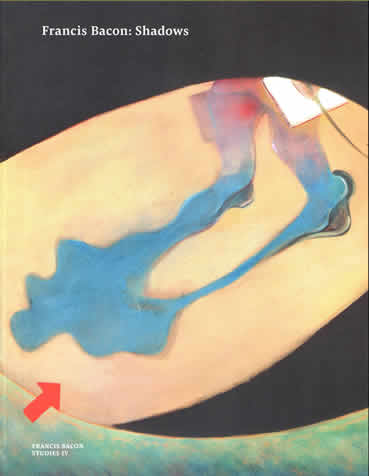
Francis Bacon: Shadows is the fourth volume in the Francis Bacon Studies series published by The Estate of Francis Bacon in association with Thames & Hudson, with financial support from the Francis Bacon MB Art Foundation. The series is edited by Martin Harrison, author of Francis Bacon: Catalogue Raisonné. It explores little-known aspects of Bacon’s life and work and includes reproductions that have never previously been published.
Continuing in the revelatory mode established by Inside Francis Bacon, Francis Bacon: Shadows contains six essays on diverse topics, interpretative as well as factual, which fulfil the fundamental aim of the series – to rethink Bacon’s art from new perspectives.
Beautifully presented, with previously unseen photographs and around 120 colour illustrations, this book boldly treads compelling new ground, offering startling insights into the works of one of the 20th century’s most highly-regarded artists.
Martin Harrison presents some exciting hitherto unseen photographs and includes a tribute to a major, if under-acknowledged, Bacon scholar, David Boxer (1946–2017). Christopher Bucklow’s essay ‘Bacon’s Afterlife’ studies the contrast between Bacon’s art and the art of our own times and examines Bacon in the light of Romantic Modernism’s confidence in the unconscious as a source of inspiration. Amanda Harrison’s essay ‘Bacon’s Occult Traces’ investigates the effect of occult influences through previous hidden or unrecognised evidence in the shadows of his paintings.
In ‘Between Francis Bacon and the Intellect’, Croatian writer and artist Stefan Haus conducts a stimulating extended study into the impact of Bacon’s paintings on the viewer, drawing on the ideas of philosophers from Plato and Aristotle to Kant and Hegel. In Hugh M. Davies’ many meetings with the artist in 1973 he socialised with Bacon’s closest friends. Some of his notes were published in Francis Bacon: New Studies – Centenary Essays in 2009, but here, for the first time, Davies’s unexpurgated diary entries are published in their entirety. Passages previously considered inappropriate for publication reveal a more rounded view of Bacon as both man and artist. In her enlightening essay ‘Work on the Barry Joule Archive’, Sophie Pretorius expertly untangles the controversy that has surrounded Bacon’s supposed source material in the Barry Joule Archive. Finally, Harrison himself contributes an essay entitled ‘Lost Bacon Paintings’. Except for those which had been published while he was still living, paintings that Bacon destroyed were excluded from Martin Harrison’s Francis Bacon: Catalogue Raisonné (2016). The reasoning was that Bacon had destroyed them because he considered them ‘failures’, and to circulate images of them carried the risk of misrepresenting him. Ultimately, the larger responsibility to make his oeuvre available to the public outweighed this decision and the thirteen as yet unknown, fascinating, if unresolved paintings were revealed in this volume.
In English
Further information about the book can be found at https://www.francis-bacon.com/shadows/