In January, Allden, Bacon and his nanny move into a converted garage at 17 Queensberry Mews West, South Kensington, where they are to live until December 1931. During this period, Bacon quickly makes a name for himself as a furniture and rug designer.
In April, he travels to Germany with Eric Allden. They visit Cologne and Munich.
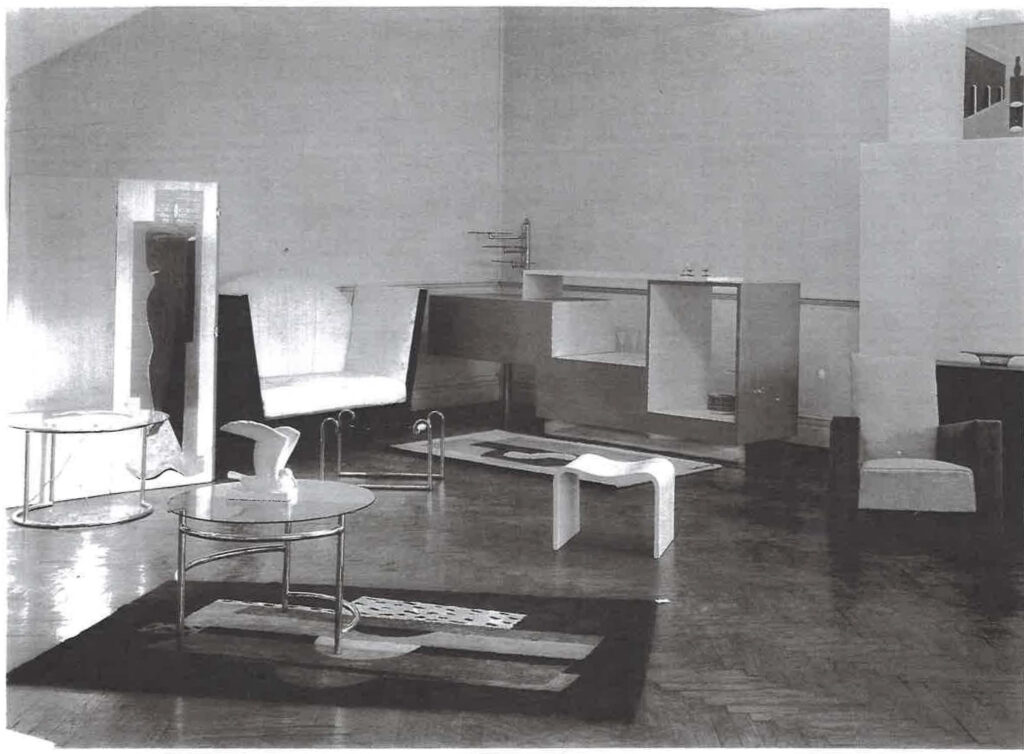
Around that time, he sends a letter to his mother, together with a photograph of his furniture and rugs.
In August, the monthly magazine The Studio publishes an article, ‘The 1930 Look in British Interior Design’, which includes two pages devoted to Bacon, praising his astonishingly avant-garde work.
Bacon meets the Australian artist Roy de Maistre, who is to be his first and arguably most formative mentor.
From 4 to 22 November, Bacon holds an exhibition at 17 Queensberry Mews West with Roy de Maistre and Jean Shepeard, in which he shows four rugs, four paintings and an engraving.
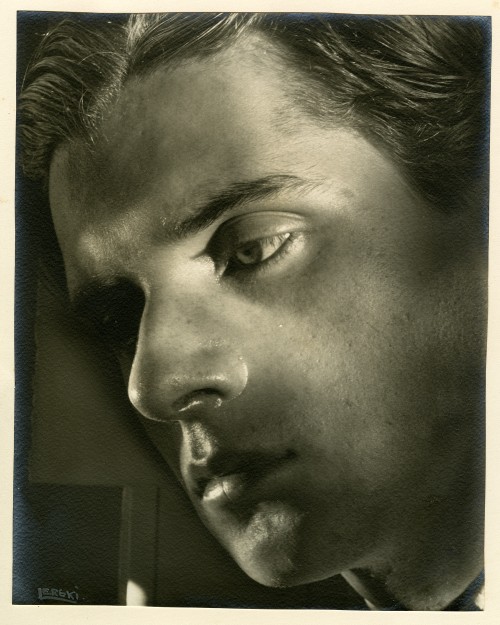
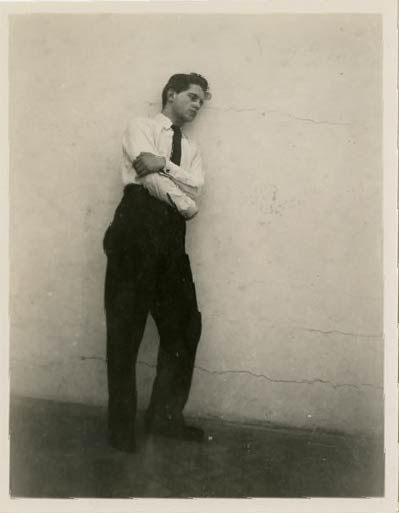
Francis Bacon, Berlin, c.1929-30. Photo: Helmar Lerski, MB Art Collection
17 Queensberry Mews West London. Photo: Francis Bacon
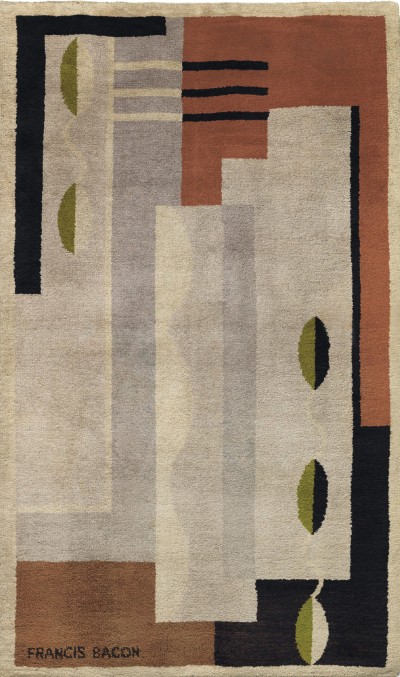
Francis Bacon, Rug, 1929, wool, MB Art Collection
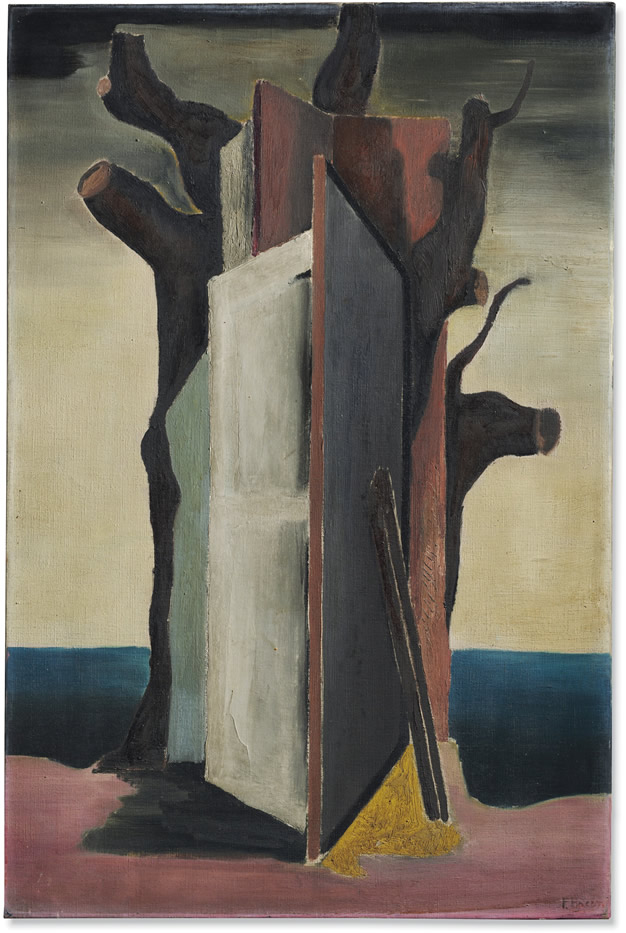
Francis Bacon, Painting, c. 1930, oil on canvas, MB Art Collection
1932
In January, Bacon is in Paris with his cousin Diana Watson. They make plans to share a flat, but it does not happen.
Bacon moves into Roy de Maistre’s Carlyle Studios space on the King’s Road, Chelsea.
Early in the year, he ends his relationship with Eric Allden. He meets Eric Walter Hall, who is his senior by seventeen years, probably at the Bath Club. Hall is to remain his lover and patron until the late 1940s.
In this period, Bacon gradually abandons furniture design to dedicate himself to painting.
Francis Bacon, Paris, 1932. Photo: Diana Watson, MB Art Collection
Roy de Maistre, Francis Bacon's studio, 1932, oil on canvas, private collection
1933
In April, two paintings by Bacon are exhibited at the Mayor Gallery, London, in the exhibition ‘Recent Paintings by English, French and German Artists’.
In the autumn, he moves to 71 Royal Hospital Road, Chelsea.
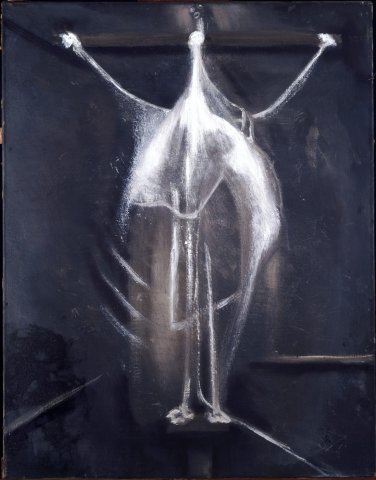
In October and November, Bacon paints his first crucifixion (simply entitled Crucifixion). It is shown at the Mayor Gallery, London and appears as an illustration in Herbert Read’s book Art Now. Shortly afterwards, the art dealer Douglas Cooper sells it to the great collector Sir Michael Sadler.
On 9 December, Bacon and his mother lunch with Allden at the Criterion, Piccadilly, London.
Francis Bacon, Crucifixion, 1933, oil on canvas, private collection
1934
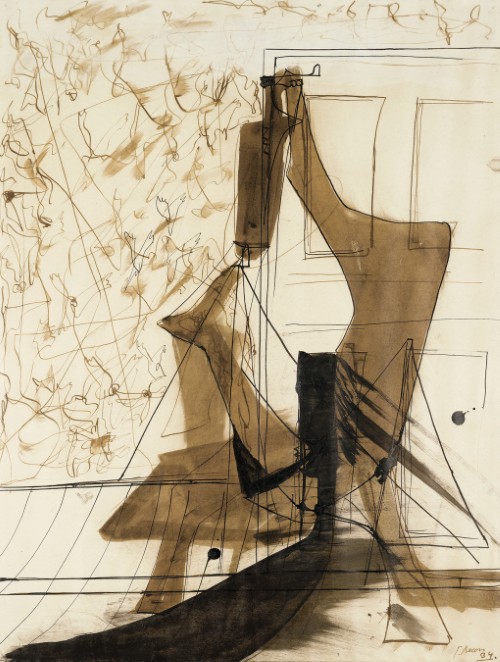
In February, Bacon has his first solo show at the Transition Gallery in the basement of Sunderland House, Curzon Street, Mayfair.
Its disappointing reception leads him to destroy most of the works exhibited. Bacon is to produce few paintings in the ten years that follow.
Francis Bacon, Corner of the Studio, 1934, pen and ink and wash on paper, private collection
Francis and Ianthe Bacon with their mother, Dorset, c. 1934
1935
Bacon moves to 102 Fulham Road, Chelsea, and later to 10 St Barnabas Street, Pimlico.
He first visits Monaco in about 1935-36.
Francis Bacon, Figures in a Garden, c. 1935, oil, egg tempera and wax on canvas, Tate. Photo: Tate
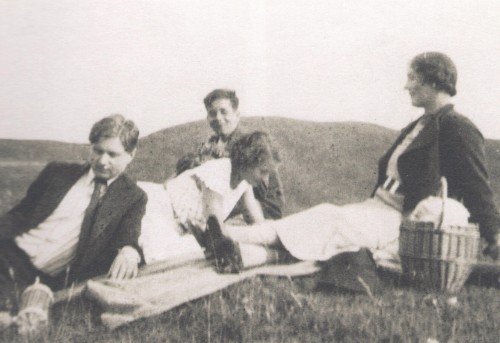
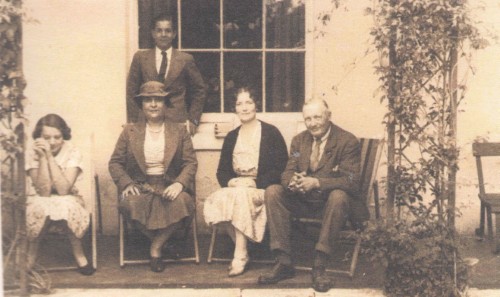
Left to right, Ianthe Bacon, au pair’s mother, Winifred Bacon and her husband, Major Bacon, at Bradford Peverell Rectory, c. 1935
1936
Bacon’s work is found insufficiently Surrealist and is not selected for the ‘International Surrealist Exhibition’ held at the New Burlington Galleries, London, beginning on 11 June.
He is later to destroy most of his output from 1936 to 1944.
He lives on the top floor of 1 Glebe Place, Chelsea, until 1943.
1937
In January, the exhibition ‘Young British Painters’, organised by Eric Hall, is held at the Thomas Agnew & Sons gallery, Old Bond Street, London. Paintings by Francis Bacon, Roy de Maistre, Graham Sutherland and Victor Pasmore are among the artworks exhibited.
Roy de Maistre, Eric Hall, 1935, oil on canvas
1939
Asthma exempts Bacon from active service at the start of the Second World War. Nevertheless, he volunteers for civil defence work in Air Raid Precautions (ARP) in Chelsea.
Francis Bacon with the Chelsea Air Raid Precautions, c. 1943