Francis Bacon MB Art Foundation Monaco October 2021 – April 2024
Studios played a major part in Francis Bacon’s creative process, and they were the unifying strand in this exhibition, which was the first to focus on the theme.
Visitors were invited into the artist’s inner sanctums, where they could see for themselves the unconventional surroundings in which he lived and produced the most harrowing images of his time. The painter himself said, ‘I am very influenced by places – by the atmosphere of a room.’
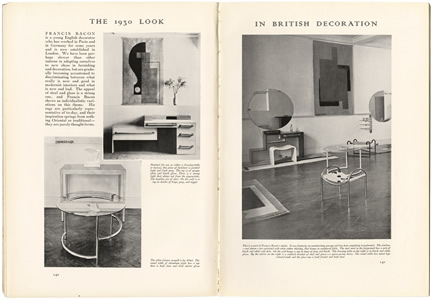
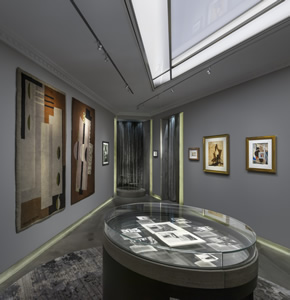
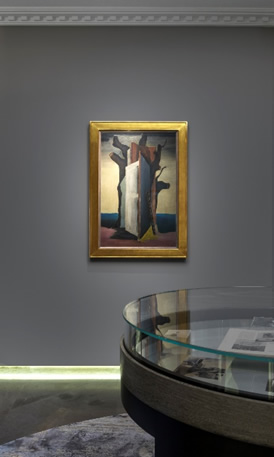
The first part of the exhibition focused on his initial career as a furniture and rug designer, on which he embarked in 1929, working from a studio at 17 Queensberry Mews West in London. The display included very rare items of furniture and rugs which had seldom been shown to the public. Although he achieved some success as an avant-garde designer and received several commissions from friends and patrons, Bacon also began to paint at this time. His earliest pictures, painted between 1929 and 1934 and displayed in the exhibition, reveal the influence of Cubism and Surrealism. The displays also included numerous objects, artist’s supplies and source materials found in his Paris studio at 14, rue de Birague, which he occupied from 1975 to 1987.
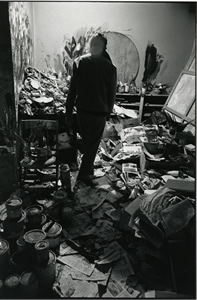
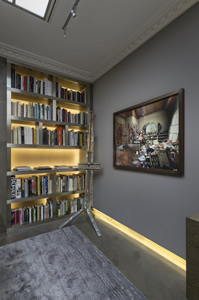
A highlight of the exhibition was Bacon’s legendary, chaotic studio at 7 Reece Mews in London, which played a major role in his work and life and reveals much about the artist’s creative process. He worked there for more than three decades, and it became a repository for thousands of items. The exhibition included an impressive recreation of the studio in miniature by the artist Charles Matton.
Rarely seen photographs of Bacon’s various studios taken by eminent photographers and close friends were dotted along the exhibition itinerary, which also introduced visitors to the paintings of the Australian artist Roy de Maistre, Francis Bacon’s chief mentor and a close friend.
All the items on display were from the MB Art Collection, the personal collection of Majid Boustany, who set up the Francis Bacon MB Art Foundation.